Table of contents
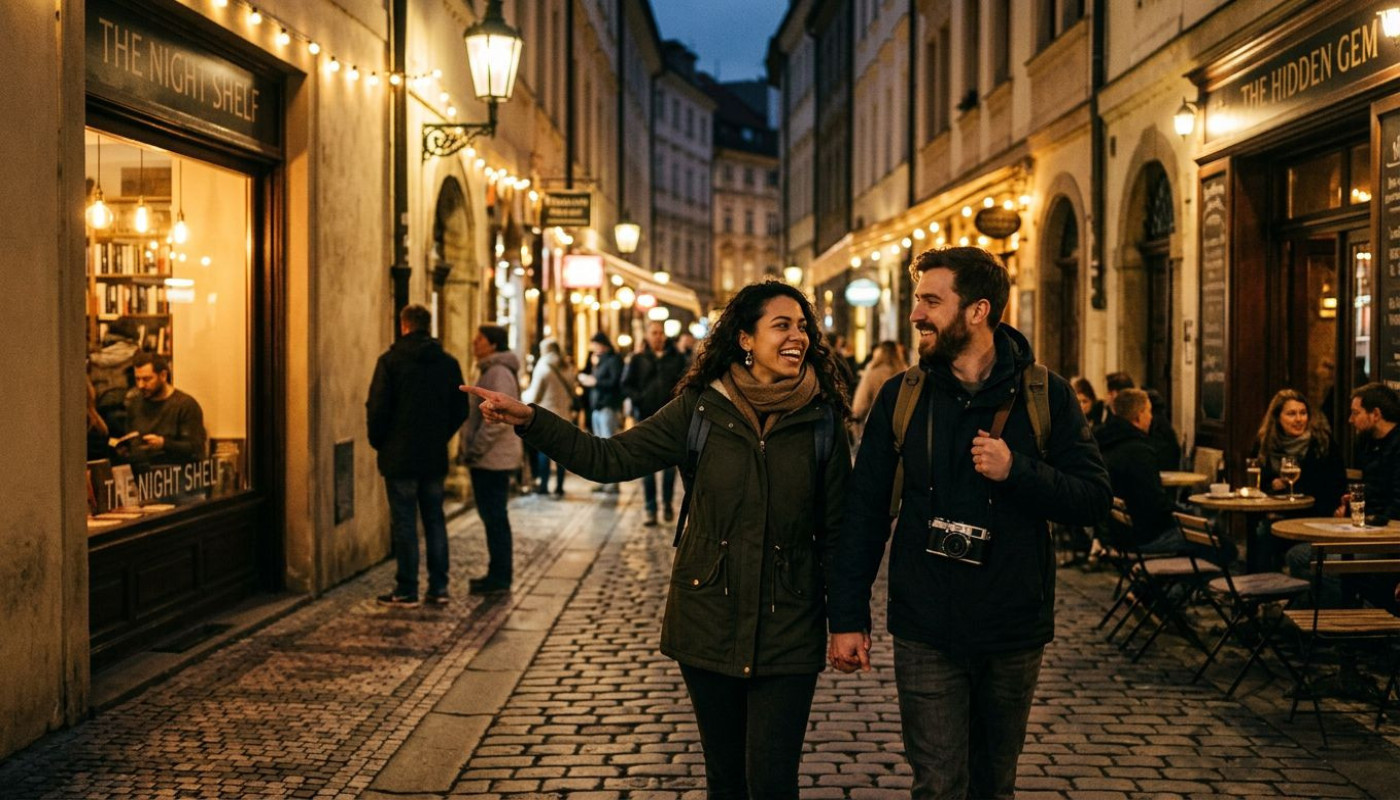
As European cities tighten rules on noise, crowds, and short-term rentals, nightlife is being reshaped, not erased, and travelers are adapting with it. Evening tourism is no longer just about bars and clubs; it is about curated walks, cultural venues extending opening hours, and safer, smaller-group experiences that reveal a different city after dark. From Marseille’s waterfront to heritage quarters across the continent, “nightfall itineraries” are becoming a practical way to avoid daytime congestion while still accessing local stories, food, and architecture.
After dark, cities tell different stories
Forget the postcard version for a moment, the one you rush through between museum queues and packed sidewalks; at night, the same streets often become legible in a new way. Urban researchers have long noted that nighttime economies concentrate activity into narrower corridors, yet that concentration can also sharpen a visitor’s sense of place, because sound, light, and movement reorganize how you experience a district. In many European city centers, the evening is when façades are lit for effect, when the sea breeze or river air changes the temperature, and when residents reclaim public space after commuter hours, all of which can turn a familiar itinerary into something closer to reportage: you notice who is outside, what shops stay open, and which corners feel like they belong to locals rather than to the day-tripper circuit.
That shift is not just aesthetic; it is also operational. Major destinations have been managing overtourism with staggered museum hours, pedestrianization, and stricter enforcement around public drinking, and the result is that visitors increasingly plan “two-speed” days: essentials in the morning, atmosphere at night. In France, for example, national data show a steady rebound in tourism after the pandemic years, and while the country remains the world’s most visited, the pressure on hotspots has pushed cities to distribute flows, including into evening time slots. Travelers who used to treat nighttime as unstructured downtime are now booking experiences that add context, because a guide, a themed walk, or a curated route can turn darkness from a limitation into a narrative tool, especially in port cities where trade, migration, and popular culture have left layered traces in a few dense neighborhoods.
Marseille’s nights, between sea air and stone
Marseille has always been a city of thresholds, between the Mediterranean and the hills, between the monumental and the improvised, and that duality becomes more apparent at night. The Vieux-Port calms down after the busiest daytime hours, and the waterfront lighting frames landmarks in a way daylight never does; the city looks less like a collection of sights and more like a coherent stage set. Yet the real appeal is not only what you see, it is what you can hear and smell: the clink of glasses from terraces, the saltiness carried inland, the late chatter that spills out of side streets. For visitors, this is also a practical advantage; summer heat eases, crowds thin, and the decision-making becomes simpler because you can move more freely between viewpoints, markets, and small squares without the friction of peak-hour density.
Planning matters, though, because Marseille’s nightlife is not a single scene but a patchwork of atmospheres, and the wrong route can feel either too quiet or too chaotic. The key is to build an itinerary that mixes open, well-lit spaces with short, purposeful links through narrower streets, and to prioritize places where the city’s identity is visible in the built environment: stairways, fortifications, quays, and the geometry of old neighborhoods. If you want a structured way to approach that, resources such as https://www.marseille-spirit.com/ can help map out evening discoveries without reducing them to a checklist. The point is not to “do” Marseille at night as if it were a product, but to let the city’s contrasts emerge: grandeur beside grit, silence beside music, sea horizon beside tight stone corridors.
Safety, transport, and timing: the new rules
Romanticizing the night is easy; navigating it well takes discipline. Across European destinations, public authorities have been balancing vibrant evening economies with resident complaints, and that balance has consequences for travelers: stricter policing of noise, more defined terrace hours, and a visible push toward organized, lower-impact activities. For visitors, the first rule is simple: timing is a safety tool. Leaving dinner too late can mean fewer transport options, while starting an evening walk too early can leave you stuck in the overlap between commuter traffic and tourist crowds. The sweet spot in many cities is the post-sunset window when street lighting is fully on, public transport is still frequent, and the atmosphere has shifted but not dissolved into late-night intensity.
Transport choices also define the experience. In most large French cities, metro and tram services slow down late, while buses and ride-hailing fill gaps; knowing the last departure times, and planning a return route before you start, reduces risk and stress. It is also worth noting that “safety” is not just about crime statistics; it is about predictability, lighting, and the feeling of control. Travelers who stick to well-trafficked corridors, avoid poorly lit shortcuts, and keep valuables discreet tend to report smoother nights, and those who choose guided or semi-guided formats often gain more than security. They gain context, because a good evening itinerary explains why a street looks the way it does, what changed after a major urban project, or how a port economy shaped a neighborhood’s social mix.
What you miss by day, you find at night
Daytime tourism rewards efficiency; nighttime exploration rewards attention. When shopfronts close and the city stops performing for the midday crowd, subtler details rise to the surface: the echo under an arcade, the rhythm of footsteps on old paving, the way a lit cornice reveals craftsmanship that fades in bright sun. In many historic districts, lighting design has been updated specifically to enhance heritage visibility, and while that is sometimes criticized as “staging,” it can also be read as a public statement about what a city wants to highlight. For a traveler, this is a chance to see urban policy made visible: which monuments are illuminated, which corridors are prioritized, and which areas are left intentionally subdued.
Night also changes the social map. Restaurants and cafés become informal observatories; you can watch patterns of local life, families out late in summer, groups gathering at familiar corners, workers finishing shifts, and visitors adapting their pace. The best itineraries build in stops that are not just “food breaks” but vantage points, and they leave room for the unplanned: a small concert spilling out of a venue, a market night, a festival installation, or simply a quieter street that makes you slow down. This is where a “beyond daytime” approach pays off, because it is less about consuming sights and more about understanding a place through its evening habits, its lighting, its sounds, and the way people occupy space once the workday ends.
Practical pointers before you go
Reserve evening activities early in peak season, and set a clear budget for transport, late meals, and any guided experience. Check local rules on terrace hours and public drinking, because enforcement varies by neighborhood. Look up any regional or municipal offers for cultural nights, reduced museum late openings, or festival programming, and plan your return route before you set out.
Similar
Exploring The Impact Of Influencer Partnerships On Niche Markets?

Experience the Unseen: Dark Sky Parks around the World